Property managers, developers, and asset owners often juggle tight budgets and competing priorities. But when it comes to smoke control systems, the automatic vents, fans, and controls that clear smoke during a fire – cutting corners on maintenance can be a deadly and expensive mistake.
Preventative maintenance is more than a compliance checkbox; it’s a strategic investment that protects lives and the bottom line. In this article, we explore how neglecting smoke ventilation maintenance can lead to legal trouble, financial loss, and safety risks, whereas a planned preventative maintenance (PPM) approach saves money and lives in the long run.

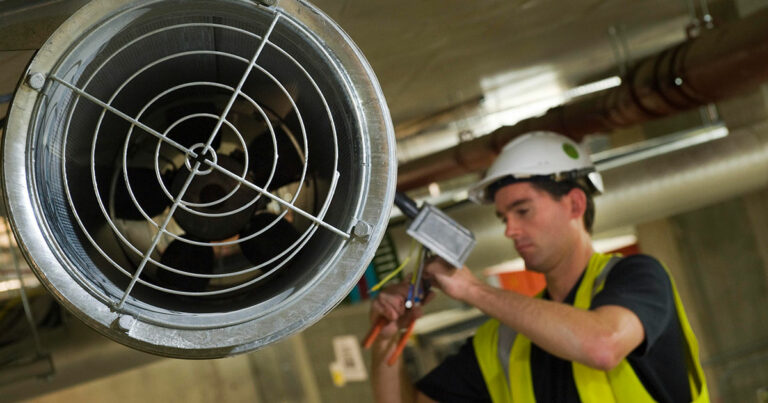
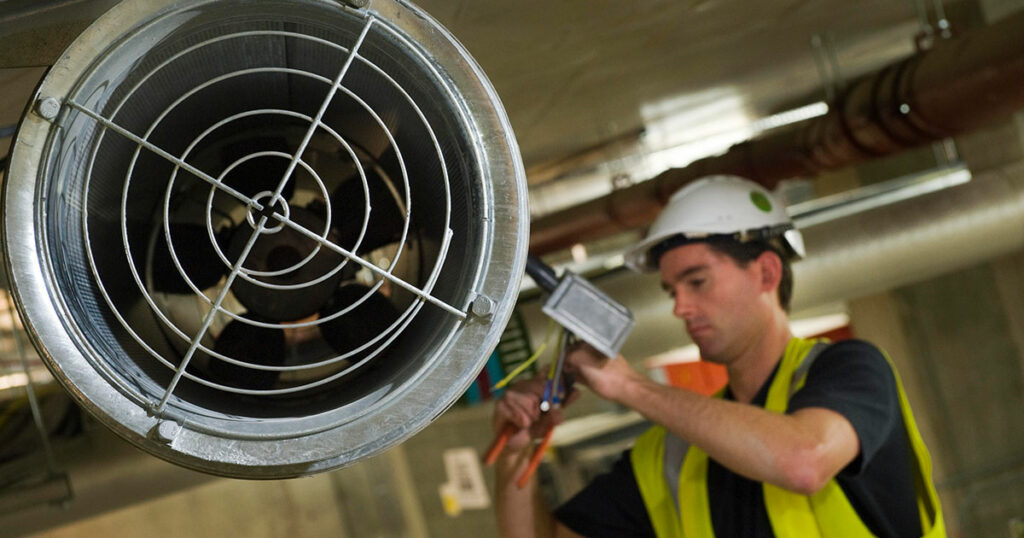
Maintenance specialists inspecting a smoke extract fan on a rooftop. Regular preventative checks like these ensure smoke control equipment remains in optimal working order for when an emergency strikes.
The High Cost of Neglecting Smoke Ventilation Systems
A malfunctioning extract fan or jammed vent may go unnoticed until a crisis hits, at which point the damage is not only measured in repair bills, but potentially in lost property and lives. According to the Fire Industry Association, a single serious fire in a business can incur an average loss of over £657,000, contributing to around £12 billion in fire-related losses annually across the UK. Worse, many businesses never financially recover from a major blaze; 25% of businesses never re-open after a serious fire, and 80% of those that don’t resume operations within a month are likely to go out of business. These grim statistics underscore that the cost of a fire far exceeds the cost of preventing one.
Smoke control systems are frontline life safety assets, they keep escape routes clear of smoke and facilitate firefighting, but, if they’re not maintained, they simply won’t perform when needed. In the Grenfell Tower disaster, for example, experts found that the building’s smoke extract system did not operate correctly, causing stair lobbies to fill with thick smoke and hindering evacuation and rescue. While Grenfell’s tragedy had multiple causes, it tragically illustrates how a faulty or non-functional smoke ventilation system can turn a dangerous situation into a catastrophic one. The message is clear: the “cost of neglect” isn’t just an abstraction, it can be counted in building repair costs, downtime, lost businesses, and human lives.
Legal and Financial Risks of Poor Maintenance
In the UK, fire safety laws hold building owners and managers accountable for keeping life safety systems in working order. The Regulatory Reform (Fire Safety) Order 2005 (often called the RRO or Fire Safety Order) explicitly requires that all fire protection equipment, including smoke control systems
“are subject to a suitable system of maintenance and are maintained in an efficient state, in efficient working order and in good repair.”
Failing to do so is an offense if that failure puts people at risk. In practice, if you neglect your smoke vents or alarms and a fire incident occurs, you could face enforcement action, hefty fines, or even criminal prosecution under the RRO. No property owner wants to end up in court because a life-saving system was left to fall into disrepair.
Recent regulations have tightened the screws further. The Building Safety Act 2022 ushered in a new era of accountability for high-rise and high-risk buildings, introducing the role of the Principal Accountable Person (PAP) responsible for a building’s fire and structural safety. For these duty-holders, neglecting smoke control maintenance isn’t just bad practice – it’s illegal. Under the Act, regulators can impose sanctions if smoke ventilation systems aren’t properly maintained. In a worst-case scenario, if a fire in a building with neglected systems leads to fatalities, those responsible could even face charges under corporate manslaughter laws. The legal landscape is clearly signaling that preventative maintenance of fire safety systems is not optional. It’s a fundamental duty tied to serious consequences for non-compliance.
Insurance implications add another financial risk. Insurers often require proof that fire protection systems are regularly serviced. If a fire occurs and investigators determine that a critical smoke vent or fan hadn’t been serviced as recommended, an insurer might deny the fire damage claim due to compliance violations. In other words, insurance can be voided by lack of maintenance; a painful truth many discover too late. Even without a total denial of claim, a history of system neglect can lead to higher premiums. Conversely, staying on top of maintenance can make your property a better insurance risk.
A well-documented maintenance record signals to insurers that you’re actively managing fire risk, which can lower insurance premiums by mitigating risk and reducing false alarms. Whether through avoided claims or better rates, insurers reward those who protect their assets.
Planned Maintenance vs. Costly Failures: An ROI Analysis
Maintaining smoke control systems is often seen as a cost center, but in reality it’s a cost saver. Planned Preventative Maintenance (PPM) turns unpredictable, large expenditures into predictable, smaller ones. Think of it as fixing a minor issue today to avoid a major disaster tomorrow. For example, replacing a burned-out extractor fan during a scheduled service might cost a few hundred pounds, whereas not replacing it could mean that during a fire, smoke isn’t cleared properly – potentially leading to extensive smoke damage, a protracted firefight, or even a full-blown flashover.
The latter scenario comes with astronomical costs: structural repairs, water damage mitigation, business downtime, and possibly medical or legal expenses if people were harmed. It’s truly a case of “pay a little now to save a lot later.”
Industry data and experience reinforce this. FDS Maintenance notes that a good PPM program will “highlight any developing issues and find any parts that may need replacing before they cause a major system failure and compromise compliance. This, in turn, replaces the need for costly reactive work.” In other words, you swap out emergency call-outs and equipment overhauls (with their premium pricing and collateral damage) for planned check-ups that nip problems in the bud.
Consider also the indirect savings from maintenance: fewer false alarms and system downtimes. A smoke control system that isn’t regularly serviced can start to behave erratically – for instance, misreading sensor inputs or failing self-checks. The result may be nuisance alarms or automatic vent activations at the wrong times. Such false alarms can be very disruptive: occupants evacuate unnecessarily, business operations halt, and the local fire brigade might even charge fees for repeated false call-outs.
One facilities report notes that a faulty fire alarm system (due to poor upkeep) can “cause false alarms, system failures, or lengthy downtime, meaning loss of trade [and] disruption of services”. The same principle applies to smoke ventilation systems. By keeping the system tuned and clean, you reduce these disruptive incidents. Less downtime and fewer interruptions translate to tangible financial savings – and a lot less frustration for everyone involved.
Finally, compare the scenarios of proactive vs. reactive spending. Preventative maintenance is typically budgeted as a manageable annual or quarterly line item, a known quantity. In contrast, a major system failure or post-fire recovery is an unplanned hit that can wreak havoc on your balance sheet (not to mention the stress and scrambling it causes). It’s analogous to servicing a car regularly versus waiting for it to break down on the motorway; one way or another, you’ll spend money, but one path is far cheaper and safer than the other. When viewed through this lens, maintenance isn’t a sunk cost, it delivers a return on investment (ROI) by averting catastrophic losses, preserving asset value, and keeping operations on track.
Compliance, Life Safety, and Peace of Mind
Beyond the financial calculus, preventative maintenance of smoke control systems is fundamentally about safety and peace of mind. You cannot put a price on a human life, and these systems are installed precisely to protect lives in the event of a fire. A well-maintained smoke ventilation system can mean the difference between a manageable fire incident and a tragedy. By automatically venting heat and smoke from corridors, lobbies, and stairwells, a functioning system provides vital clear air paths for occupants to escape and for firefighters to attack the blaze. The Smoke Control Association (SCA) emphasises that smoke control systems offer critical protection for both lives and property during a fire emergency, enabling safer evacuations and faster emergency service access. This safety performance, however, is only assured if the system is in efficient working order – hence the need for regular tests, cleaning, and servicing.
It’s worth noting that preventative maintenance is itself a legal and moral responsibility to safeguard building occupants. Under UK fire safety regulations, you as the responsible person must not only install life safety systems, but also keep them operational at all times. This means scheduling annual expert servicing and frequent functional tests (monthly, weekly, or even daily checks as guided by standards like BS 9999 and BS EN 12101).
These routine checks ensure that backup batteries are charged, fans run when needed, vents open and close freely, and sensors are unobstructed. Skipping these measures isn’t just a paperwork issue, it directly correlates to how well your building would withstand a fire. Conversely, diligent maintenance delivers peace of mind: you, your tenants, and your staff can trust that the smoke control system will perform as designed in a crisis.
For building owners and asset managers, there’s also reputational peace of mind. In an age of increased scrutiny from regulators and the public, being known as a company that prioritises safety and compliance is an asset in itself. No developer or property management firm wants their name in the headlines for a fire or safety violation. By contrast, demonstrating a strong maintenance regime can enhance your standing with stakeholders.
Residents and employees feel safer (and thus happier) in your buildings, investors see that you protect their assets responsibly, and regulators have confidence in your management. In the context of the Building Safety Act’s new regulatory regime, those who maintain robust safety cases and maintenance records will find interactions with the Building Safety Regulator far smoother. It’s a virtuous cycle: maintenance leads to compliance, compliance leads to trust, and trust is good for business.
Conclusion: Maintenance as a Sound Investment in Safety and Finance
The preventative maintenance of smoke ventilation systems should be viewed not as an overhead cost, but as a sound investment and a cornerstone of risk management. The cost of neglect, in contrast, is a gamble with extremely high stakes – risking lives, facing legal penalties, and exposing assets to devastating losses. By investing in a PPM program for your smoke control systems, you are effectively taking out an insurance policy against disaster: you spend a little on upkeep to avoid spending a fortune on emergencies. The result is a safer environment for occupants and a more secure financial outlook for the property.
In the end, preventative maintenance saves money and lives by ensuring that critical smoke control systems work when it counts. It’s about shifting the narrative from reactive fixes to proactive care. As you plan your budgets and operational strategies, remember that compliance isn’t just a box to tick – it’s an opportunity to protect your investment. The return on investing in maintenance comes in many forms: legal compliance, avoided downtime, prolonged equipment life, safer buildings, satisfied insurers, and the priceless assurance that you’ve done everything possible to safeguard the people who live or work in your property. In life safety, an ounce of prevention is worth far more than a pound of cure – it’s measured in pounds saved and lives protected.