Car Park Smoke Ventilation Maintenance
Car park smoke ventilation systems have to do more than move air. In enclosed, basement and multi-storey car parks, they help control the build-up of vehicle fumes in normal operation and, in a fire, they are expected to remove smoke and heat to support safer escape and clearer access for the fire service.
FDS Maintenance maintains mechanical car park ventilation systems across the BS 7346-7 categories, including Cat A enhanced smoke control systems, Cat B smoke-clearance systems and Cat C vehicle exhaust pollution control systems. Our maintenance scope covers the critical components that keep the system ready to perform, including:
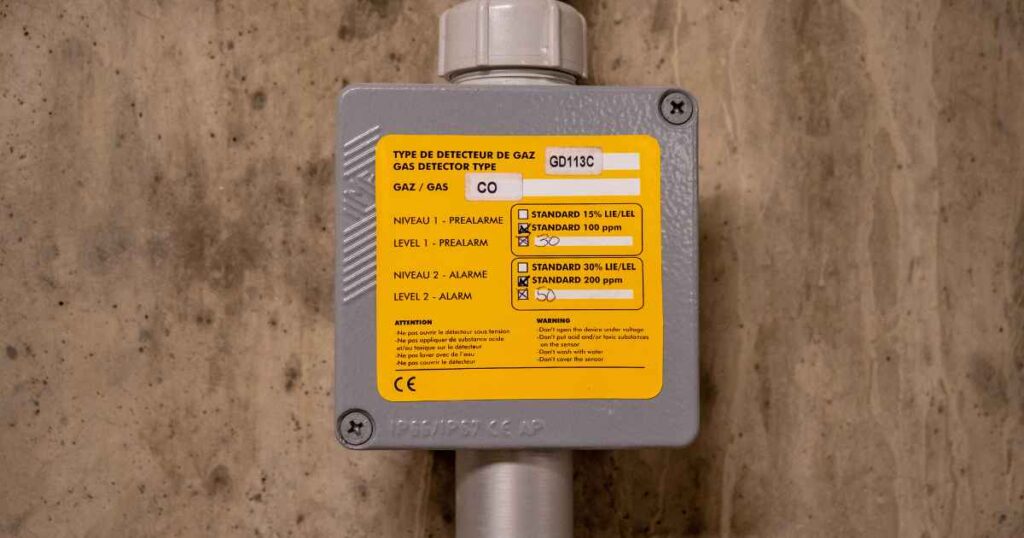
CO Sensors:
Monitor carbon monoxide levels, and in some systems nitrogen dioxide, to automatically activate ventilation when air quality needs to be controlled.
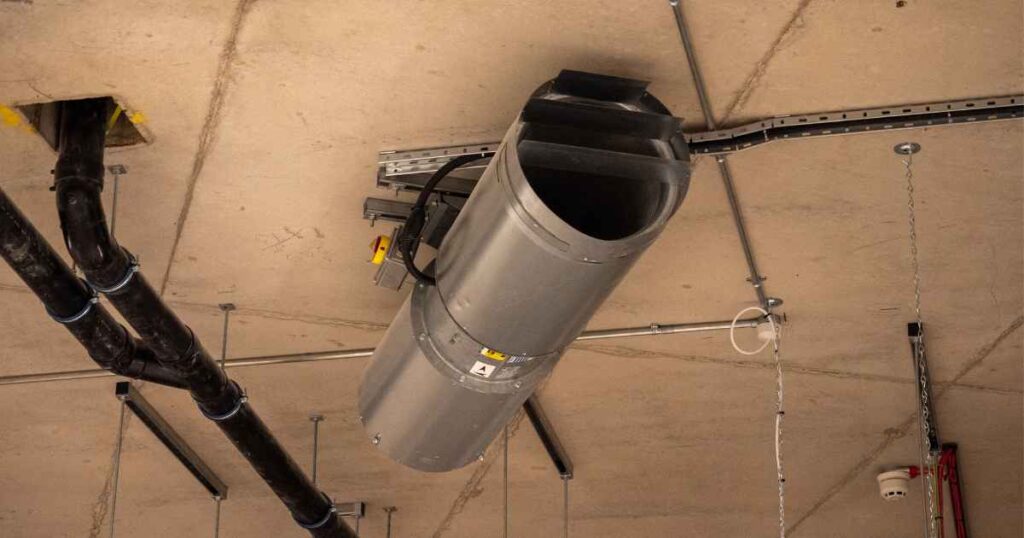
Jet fans:
Ceiling-mounted impulse fans that move air and smoke towards extract points, helping maintain airflow across larger or enclosed car park areas.
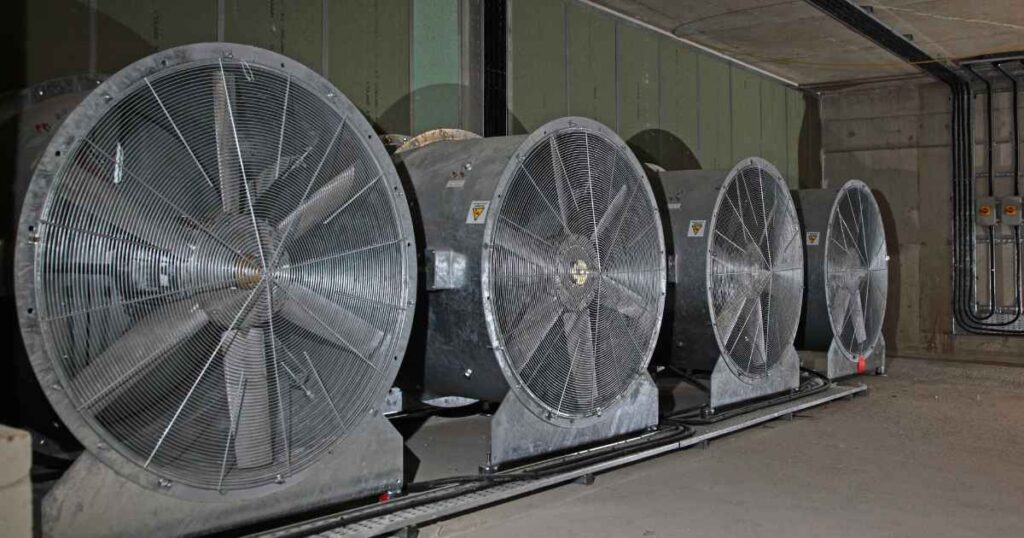
Smoke extract fans:
High-performance fans that remove smoke, heat and exhaust air from the car park. In fire mode, they’re designed to operate at increased capacity for rapid smoke clearance.
Ducts, dampers and vents:
Direct airflow through the system, allowing fresh air in and smoke or exhaust air out. These may include ductwork, motorised dampers, grilles, shafts or natural openings.
Control panel & BMS integration:
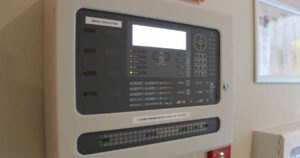
The system’s central control point, receiving signals from sensors, alarms and interfaces to activate fans, dampers and overrides, including firefighter controls where fitted.
As one of the first companies in the UK to achieve SMR 01 certification, FDS Maintenance brings specialist smoke ventilation competence to systems that cannot be left to chance.
Why does it matter?
Because a system can appear healthy until the moment it is needed most. Sensors can drift, dampers can stick, fans can run without delivering design airflow, power changeover can fail and third-party changes can quietly undermine the original cause-and-effect. Smoke control systems are susceptible to interference by third parties, which is exactly why regular testing, inspection and record-keeping are so important.
Our maintenance approach is built around the Regulatory Reform (Fire Safety) Order 2005 and the competence principles reflected in BS 7346-8. We carry out the functional testing, sensor checks, cause-and-effect verification, power-supply checks, airflow testing and reporting needed to help responsible persons keep car park smoke ventilation systems in efficient working order and supported by a clear maintenance trail. Where relevant, our work is aligned with Approved Document B for fire performance and Approved Document F for day-to-day ventilation guidance.
Need a competent maintenance partner?
Frequently Asked Questions
What does FDS maintain on a car park smoke ventilation system?
We maintain the complete working system, not just isolated items. That includes control panels, extract fans, jet fans, induction fans, dampers, vehicle fume detectors, smoke curtains or shutters where fitted, interfaces, override controls and standby power arrangements.” That wording matches the asset examples and maintenance regime set out in the SCA guidance.
Why does a car park smoke ventilation system need maintenance if it still seems to run?
Because visible operation is not the same as proven performance. Approved Document B requires specific fire-performance outcomes for non-open-sided car parks, and SCA guidance highlights risks such as hidden faults, failed power transfer, poor airflow, uncalibrated sensors and third-party interference. Maintenance is what turns apparent operation into evidenced readiness.
How often should the system be maintained?
Routine user checks and periodic specialist maintenance are both important. The SCA guidance describes daily, weekly, monthly and three-monthly inspection activity, recommends six-monthly inspection and maintenance to identify unmonitored faults and preserve reliability, and calls for annual checks by a certified organisation. It also says higher-risk situations may justify more frequent specialist inspection.
Routine checks: Control panels should be checked regularly for fault indications, with fans monitored for unusual noise, damage or poor operation. Vents, dampers and grilles should also be visually checked to ensure they remain clear, unobstructed and in the correct standby position.
Monthly testing: Key components should be functionally tested, including CO sensor activation, fan start-up, standby power operation and accessible fan or damper components. Sensor covers, vents and grilles should be cleaned where required.
Quarterly inspections: Each zone should be tested on a planned rotation by a competent person. This should include fire alarm activation, fan and damper response, firefighter override controls, detection inputs and system interfaces, with any faults logged and actioned.
Six-monthly servicing: A specialist smoke ventilation maintainer should carry out a more detailed service, including logbook review, cause-and-effect checks, power changeover testing, battery condition checks, fan runtime review and operation of moving components.
Annual inspection: A certified smoke control organisation should complete a full system inspection and performance review. This may include fan performance testing, sensor calibration, ductwork checks, full system operation and the issue of a maintenance certificate, with any defects or non-compliances clearly reported.
What should a maintenance visit include?
Functional testing of the controls and cause-and-effect, fan and damper operation, sensor checks and calibration where relevant, power-failure and standby-supply checks, airflow verification, logbook review and clear reporting. That reflects the car park maintenance regime in the SCA guidance, including checks on environmental control sensors such as CO or NO2 sensors, fault monitoring and representative flow-rate testing.
Will I receive a report or certificate?
Yes, we will provide a maintenance certificate and the maintenance outcome will be clearly recorded as pass, pass with advisories or fail, with relevant defects and remedial actions entered in the system logbook. That is important both for internal control and for evidencing that maintenance has actually been carried out.