Emergency Lighting Annual Drain Down
When the mains fail, your emergency lighting should already be ready. FDS Maintenance provides Emergency Lighting Annual Drain Down services to prove that your emergency escape lighting will operate when normal lighting fails. This annual full-duration test checks each emergency fitting for its full rated duration so you have clear evidence of battery performance, clear fault reporting and a practical route to remedial action if defects are found. In many premises that means a 3-hour test, but the correct duration is always the rated duration of the system installed at your site.
Annual Full-Duration Emergency Lighting Testing
Our annual drain down service is designed for non-domestic premises and the common parts of residential buildings where emergency lighting protects escape routes and key fire safety points. Depending on your installation, that can include emergency luminaires, illuminated exit signs, fittings on corridors and stairways, final exits, changes in floor level, call points, fire-fighting equipment and any relevant central controls or automatic test facilities.
BAFE accredited and LPS 1014 certified, FDS Maintenance helps keep emergency lighting systems compliant, reliable and ready to guide people to safety when it matters most.
What FDS Maintenance Tests and Records
During the annual visit, the normal lighting supply is simulated to fail so the emergency lighting system operates in emergency mode.
Each relevant fitting is checked for correct illumination, the system is observed for the full rated duration, and the installation is then returned to normal supply so that charging indicators and recovery can be confirmed.
We log any failures, identify fittings or batteries that do not maintain performance for the full test period, report defects clearly, and support the records that should be kept in your fire safety logbook
Test Type
Typical frequency
Test duration
Main purpose
Daily visual check of central controls
Daily, where central controls or indicators are present
Visual only
Confirm indicators and controls appear normal before a fault goes unnoticed
Monthly function test
At least monthly
Long enough only to confirm each emergency lamp illuminates
Check basic operation and identify obvious failures early
Annual drain down or full-duration test
At least annually
Full rated duration of the installation; commonly 3 hours in many UK premises
Prove the emergency lighting can sustain required output for the whole emergency period
Need your emergency lighting tested?
BS 5266 Compliance, Fault Reporting and Remedial Actions
FDS Maintenance carries out annual emergency lighting drain down services with reference to BS 5266 and the wider UK fire safety framework. In England and Wales, Articles 14 and 17 of the Fire Safety Order require suitable emergency lighting where needed and a proper system of maintenance. BAFE guidance also expects failures to be logged, alternate safety procedures to be introduced until faults are repaired, and all testing and repair information to be recorded in a logbook. The strongest website claim is therefore that we help clients test, document and maintain emergency lighting in line with current standards and guidance, rather than claiming that one visit alone “certifies compliance”
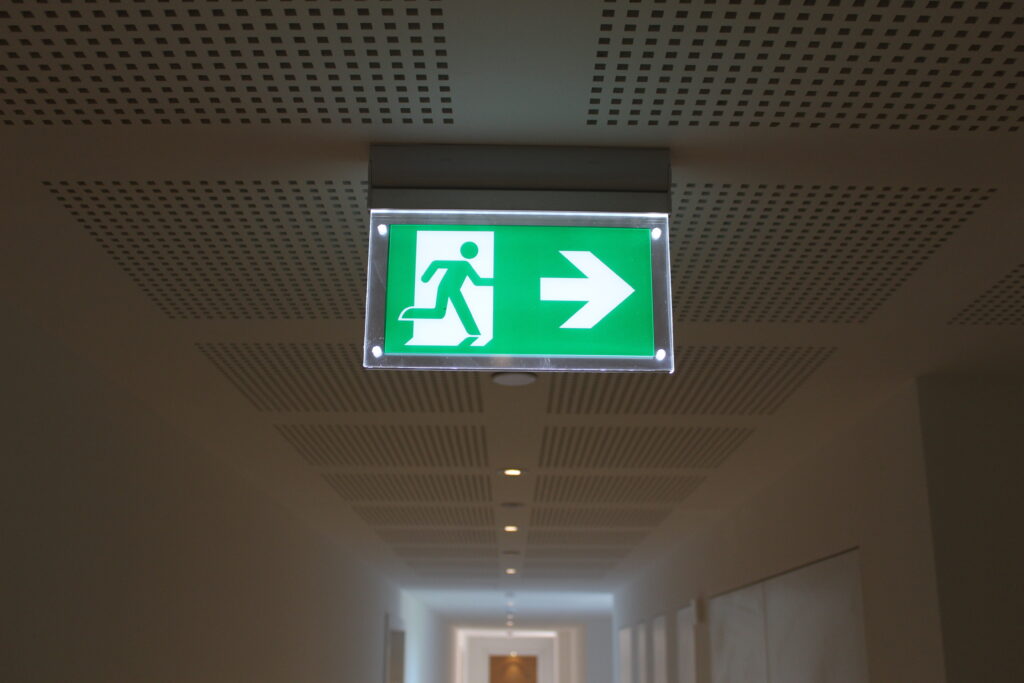
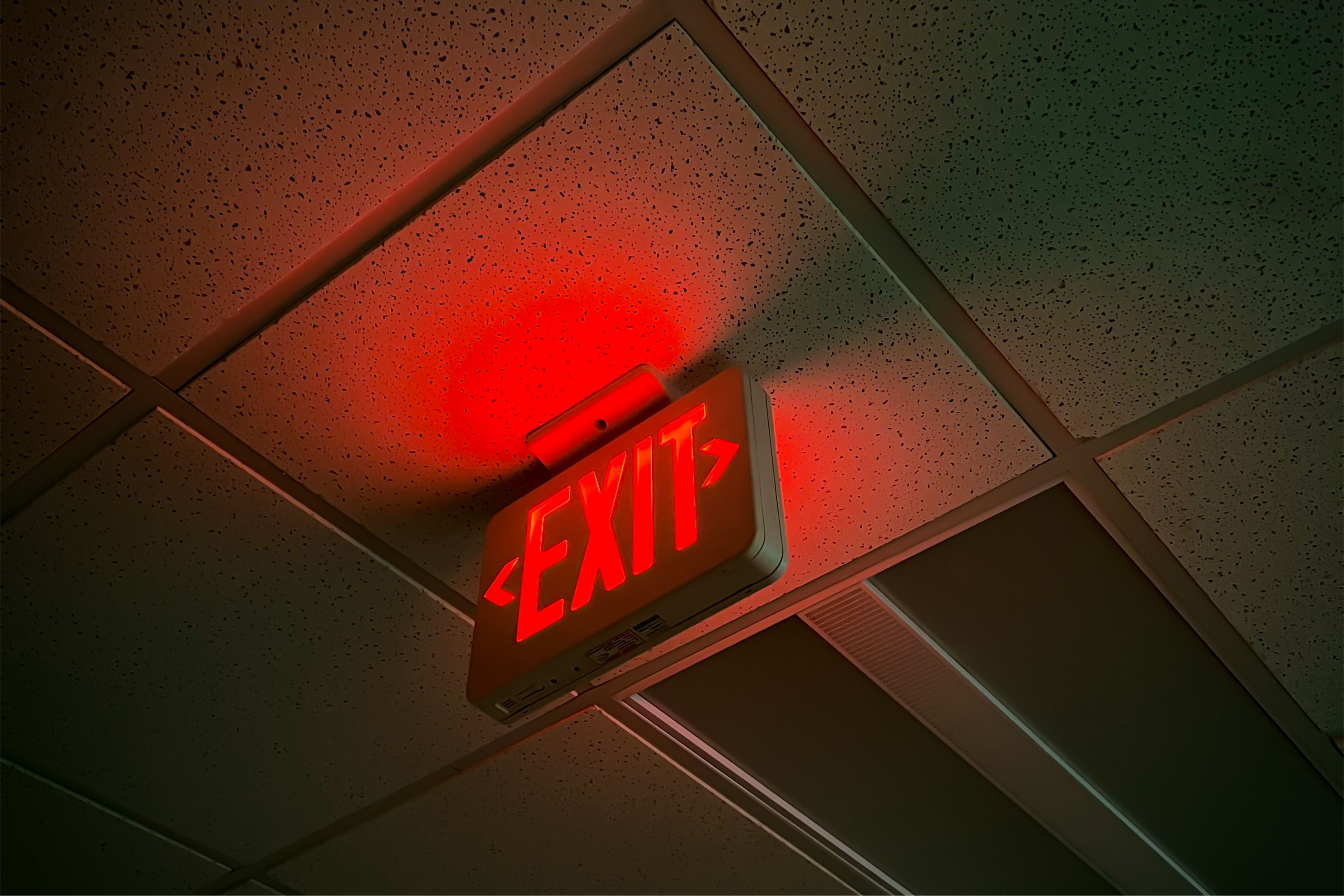
Because full-duration testing can leave batteries temporarily depleted, timing matters. Batteries typically need around 24 hours to recharge after a full discharge test, and the premises should not be re-occupied until the emergency lighting system is fully functioning unless suitable temporary arrangements are in place. That is why our annual drain down service is planned around site use, occupancy and risk, with faults reported promptly and remedial actions clearly prioritised.
Need your annual emergency lighting drain down booked around site occupancy? Contact FDS Maintenance to schedule a full-duration test, receive clear fault reporting and keep your emergency lighting records up to date.
Frequently Asked Questions
What is an emergency lighting annual drain down?
It is the annual full-duration or full discharge test of the emergency escape lighting system. The normal lighting supply is simulated to fail, and each relevant fitting is checked to confirm it remains operational for its full rated duration.
How often is the annual drain down required?
A monthly functional check and a full rated duration test at least annually.
Is the annual test always 3 hours?
Not necessarily. The test should prove the installation for its rated duration. Emergency lighting units are commonly designed for between one and three hours, with three-hour units the most popular in practice, so “3-hour drain down” is often right but should not be stated as universal.
What does the service usually cover?
It usually covers the installed emergency escape lighting system in scope at the premises: emergency luminaires, illuminated exit signs and the fittings serving escape routes, stairs, final exits, changes in level, call points, fire-fighting equipment and similar designated locations, together with relevant central controls or automatic test facilities where present.
Who is responsible for arranging annual drain down testing?
The legal responsibility sits with the Responsible Person, and they must appoint competent persons where needed to help with compliance. BAFE also says the routine functional operation of the emergency lighting system falls to the user or Responsible Person, even when specialist contractors are engaged to assist with maintenance and repairs.
Can the premises stay occupied during the test?
That depends on risk, occupancy and whether suitable temporary arrangements are in place. Batteries typically take 24 hours to recharge after a full discharge test and that premises should not be re-occupied until the system is fully functioning unless alternative arrangements have been made.
What records prove compliance or due diligence?
The key evidence is an up-to-date logbook plus a written maintenance report. All testing and repair information should be recorded in a logbook, and emergency lighting maintenance report would normally be required with confirmation that relevant work and faults have been entered in the system log book. Checklists also ask whether records of testing and maintenance are being maintained.
What happens if lights fail the annual test?
Failures should be recorded, temporary or alternate safety procedures should be introduced where necessary, and a competent person should repair the fault. The page should make clear that failed fittings, batteries, lamps, chargers or controls are not simply “noted”; they trigger fault reporting and a remedial action plan.
When should emergency lighting batteries be replaced?
The practical trigger is performance: the annual full-duration test exists to confirm the batteries are working as required, so if a unit cannot sustain its rated duration, that fault should be recorded and repaired by a competent person.
Do self-testing or remotely monitored systems remove the need for annual testing?
No. They can reduce the amount of manual routine checking, but they do not remove the need to review results, keep records and act on faults. Self-testing facilities reduce routine checks to a minimum, however users need to be trained on how to check automatic test facilities and to keep documents up to date.
How much does an annual drain down cost?
Pricing usually depends on system size, the number and type of fittings in scope, the rated duration being proved, access and occupancy constraints, and whether defects lead to follow-up remedial work.
Will I get a certificate or a report?
For annual maintenance, the most important evidence is usually a maintenance report and updated logbook, not a commissioning certificate. BAFE’s SP203 guidance says a maintenance report generally in accordance with Annex M of BS 5266-1 would normally be required, while commissioning and handover documents are separate evidence associated with installation and commissioning stages.